
️✂️💇♀️ Earn While You Learn: Paid Hairdressing Training Programs (Government Support)
💰 Paid Salary During Training: $17 per hour
🎓 No experience required | ✅ No Need To Worry About Tuition Fees
Starting a career as a professional hairdresser does not require a four-year college degree or expensive private cosmetology school tuition. Across the United States, government-supported and employer-sponsored paid hairdressing training programs allow participants to earn an income while learning hands-on salon skills—often leading directly to long-term employment in salons, barbershops, beauty chains, and personal care businesses.
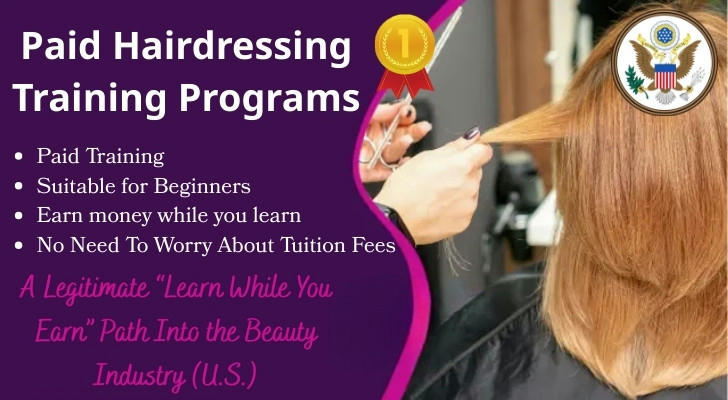
Through state-recognized cosmetology apprenticeships and workforce-supported training models, participants receive paid on-the-job training, structured technical instruction, and the experience required to qualify for state hairdresser or cosmetology licensure.
🌟 Why Choose a Paid Hairdressing Training Program?
✅ Earn While You Learn — Get Paid From Day One
Unlike private beauty schools that require high upfront tuition, many paid hairdressing programs place you directly with a licensed salon or employer.
You earn an hourly wage while training under licensed cosmetologists and experienced stylists, learning real-world skills clients actually pay for.
Training typically includes:
- Hair cutting, styling, and finishing techniques
- Shampooing, conditioning, and scalp care
- Hair coloring, highlighting, and chemical services (state-dependent)
- Sanitation, safety, and infection control
- Client consultation and customer service
- Salon workflow and time management
You work. You learn. You get paid—from day one.
✅ Workforce-Approved, Job-Focused Training
Many paid hairdressing programs operate under state workforce agencies or federally aligned apprenticeship models, including programs listed through Apprenticeship.gov, where personal care occupations are increasingly supported as skilled trades.
Typical program length ranges from 12 to 24 months, depending on state licensing hour requirements, and combines:
- Paid salon-based employment
- Structured technical instruction
- Supervised hands-on practice
- Preparation for state licensing exams
Key advantages include:
- Training aligned with real salon demand
- No student loan debt
- High retention and job placement rates
- Clear pathways to advanced cosmetology roles or salon management
Many trainees are hired full-time by the same salon where they complete their training.
✅ State-Recognized Hairdressing / Cosmetology Eligibility
Upon successful completion, participants may qualify for:
- Eligibility to sit for state cosmetology or hairdresser licensing exams
- Documented on-the-job training hours
- OSHA-aligned workplace safety knowledge
- Recognized credentials accepted by licensed salons statewide
Licensing requirements vary by state, but apprenticeship-based pathways are legally recognized alternatives to traditional cosmetology school in many U.S. states.
🧰 Program Structure: Government-Supported Hairdressing Training
According to Apprenticeship.gov, personal care roles—including hairdressing—are increasingly offered through publicly supported “earn while you learn” training models, backed by employer partnerships and workforce development systems.
Common program features include:
- Paid employment with a licensed salon or beauty employer
- Structured instruction aligned with state licensing rules
- Supervised practical hours in real salon environments
- Clear documentation of training hours for licensure
This model prioritizes job readiness, not classroom-only theory.
💇 What Skills Will You Learn?
Participants typically gain hands-on experience in:
- Hair cutting and styling for diverse hair types
- Coloring, toning, and basic chemical services
- Proper sanitation and tool sterilization
- Client consultation and service recommendations
- Retail product knowledge and upselling
- Professional communication and customer retention
Training focuses on skills that generate income, not abstract coursework.
👥 Who Can Apply?
| Applicant Type | Program Fit |
|---|---|
| Young Adults (18–25) | Enter a skilled trade without student debt |
| Career Changers (25–45) | Move into a stable, service-based profession |
| Experienced Workers (45–60) | Learn a practical skill with steady demand |
| Mature Learners (60+) | Structured training with predictable schedules |
Most programs require:
- Legal authorization to work in the U.S.
- Background check (state and employer required)
- Basic English communication skills
- Ability to stand for extended periods
- Willingness to work with clients
No prior salon experience required.
🎯 Hairdressing Training by Age Group
Paid hairdressing programs are open to all age groups:
- Ages 18–25: Build a long-term beauty career without tuition debt
- Ages 25–40: Ideal for career transitions into client-facing roles
- Ages 40–55: Reliable income with flexible salon paths
- Ages 55+: Consistent demand in personal care services
In the beauty industry, skill, professionalism, and client trust matter more than age.
🚀 Application Process
- Submit an online application
- Complete eligibility screening
- Attend interview or salon orientation
- Receive acceptance notice
- Begin paid hairdressing training and employment
Timelines vary by state and employer, but many applicants receive responses within a few weeks.
✅ Summary: Start a Beauty Career Without Student Debt
Through government-supported paid hairdressing training programs, you can:
- Earn income while learning
- Avoid expensive cosmetology school tuition
- Gain state-recognized, job-ready skills
- Build a long-term career in a high-demand personal care industry
No experience required.
No Need To Worry About Tuition Fees.
If you’re ready to learn a practical skill, work with people, and get paid while training, paid hairdressing programs offer one of the most realistic paths into the U.S. beauty workforce.