
Paid HVAC Training Programs: Learn While You Work in a Skilled Trade
Paid HVAC Training Programs | Learn While You Earn | Hands-On Skilled Trade Path
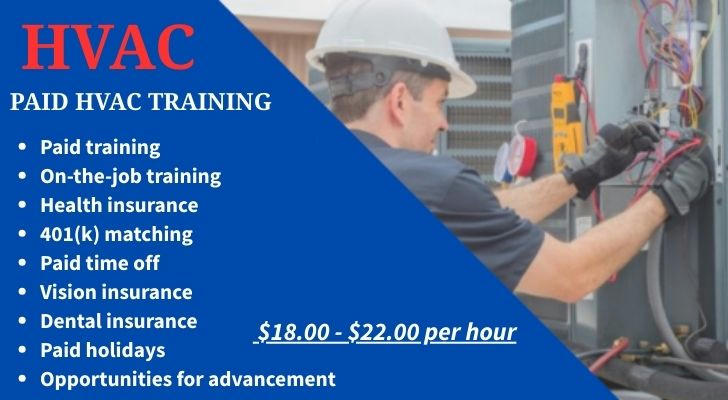
Paid HVAC training programs offer a practical way to enter the heating, ventilation, and air conditioning industry while gaining real-world experience on the job. Participants develop technical skills through hands-on work while earning hourly compensation, making this path suitable for individuals seeking a stable skilled trade without stepping away from active employment.
Why Choose Paid HVAC Training?
💼 Learn While Working
Paid HVAC training combines daily job responsibilities with structured skill development in real service environments.
🛠 Practical, Hands-On Experience
Training focuses on installation support, system maintenance, diagnostics, and field-based technical tasks.
📈 Strong Industry Demand
HVAC remains a consistently needed skilled trade across residential, commercial, and industrial sectors in the United States.
📚 Skills Developed During Training
Paid HVAC training emphasizes job-ready competencies, including:
• HVAC system installation and maintenance
• Electrical safety and basic wiring
• System diagnostics and troubleshooting
• Refrigeration cycle fundamentals
• Airflow and ventilation principles
• Customer interaction and service procedures
🌡 HVAC Systems Commonly Covered
• Central air conditioning systems
• Heat pump systems
• Gas and electric furnaces
• Split and packaged HVAC units
• Thermostats and control systems
• Ventilation and ductwork components
Hands-on exposure to these systems supports faster adaptation to field-based service and repair work.
🚀 Key Advantages of Paid HVAC Training
• Earn income while developing skills
• On-the-job technical learning
• Faster transition into technician roles
• Exposure to real service environments
• Potential for long-term employment
👥 Who Is This Suitable For?
| Background | Benefit |
|---|---|
| Entry-level candidates | Skill development with income continuity |
| Construction or electrical workers | Transfer existing technical experience |
| Career changers | Structured entry into a skilled trade |
| HVAC school graduates | Reinforcement of field experience |
📝 Qualifications & Skills
Participants may be expected to meet several of the following criteria:
- Experience in HVAC, construction, electrical, or related fields (preferred)
- EPA Universal Certification
- Ability to work with 28-foot extension ladders and 12-foot step ladders
- Ability to lift objects weighing up to 100 pounds
- Team collaboration and independent work capability
- Customer service skills
- Mechanical aptitude
- HVAC technical school certificate
- High school diploma or equivalent
- Valid driver’s license with an insurable driving record
💵 Pay & Career Outlook
• Hourly compensation commonly ranges between $18.00 and $22.00
• The annual salary for HVAC technicians can range from $38,194 - $94,054.
Career development paths may include commercial HVAC roles, lead technician positions, contracting opportunities, or maintenance management.

📨 How to Apply
- Search for paid HVAC training or HVAC technician trainee positions online
- Review job requirements, certifications, and location details
- Submit a basic application with contact information and work background
- Complete a short interview or onboarding process
- Start hands-on HVAC training while earning hourly compensation
❓ Frequently Asked Questions
Is this training paid?
Yes. Participants receive hourly compensation while gaining hands-on experience.
Is prior experience required?
Experience is preferred, though some programs accept candidates with basic technical or mechanical skills.
Is HVAC a stable career choice?
HVAC continues to provide long-term demand and consistent employment nationwide.
🔧 Final Overview
Paid HVAC training programs create a direct path into a skilled trade by combining real work experience with structured learning. This approach supports income continuity, skill development, and long-term career growth in the HVAC industry.