
️🍰 Baking and Pastry Certificate Programs: The Best Way to Enter the Baking and Pastry Industry in 2026
💰 Future salary: $40,706 - $52,602 per year
✅ No Need To Worry About Tuition Fees
Breaking into the baking and pastry industry no longer requires years of culinary school or overwhelming tuition costs. In 2026, Baking and Pastry Certificate Programs have become one of the most practical, workforce-aligned pathways for Americans looking to enter professional baking, pastry arts, and food production roles.
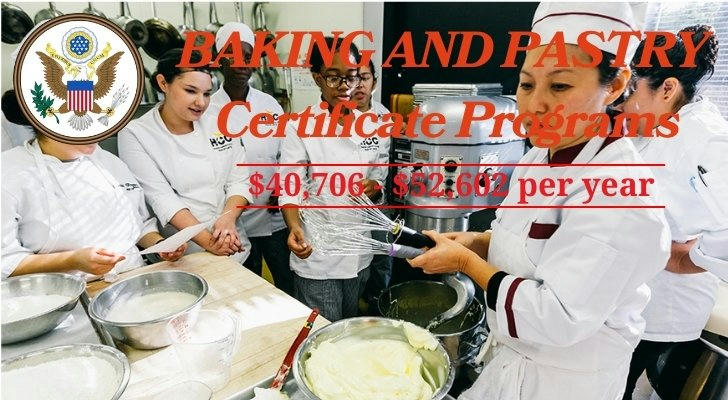
Across the United States, community colleges and accredited training institutions now offer career-focused baking and pastry certificate programs that emphasize hands-on skills, industry standards, and rapid entry into employment. These programs are designed for real kitchens, real employers, and real jobs—not academic theory.
🌟 Why Choose a Baking and Pastry Certificate Program?
✅ Industry-Ready Skills Without a Long Degree Commitment
Unlike traditional culinary degrees that can take two to four years, baking and pastry certificate programs are typically completed in 6 to 12 months, depending on the institution and enrollment format.
Training focuses on practical competencies such as:
- Professional bread and pastry production
- Cake decorating and finishing techniques
- Commercial baking equipment operation
- Food safety and sanitation standards
- Ingredient scaling, recipe costing, and kitchen workflow
The goal is simple: prepare students to work in commercial kitchens from day one.
✅ Workforce-Oriented, Employer-Relevant Training
Most reputable baking and pastry certificate programs are aligned with regional workforce needs and designed in consultation with industry professionals. This ensures graduates develop skills that employers actually demand.
Key advantages include:
- Curriculum aligned with bakeries, restaurants, hotels, and food manufacturers
- Emphasis on speed, consistency, and quality control
- Exposure to real production environments
- Clear pathways into entry-level and mid-level baking roles
Graduates often move directly into positions such as bakery assistant, pastry cook, production baker, or cake decorator.
✅ Recognized Credentials That Support Employment
At the conclusion of the program, you’ll complete the Culinary Arts Capstone Practicum, a practical assessment aligned with the Certified Pastry Culinarian® requirements established by the American Culinary Federation (ACF). This certification exam evaluates proficiency in four key areas:
- Safety and Sanitation Skills
- Organizational Efficiency
- Craftsmanship and Technical Execution
- Quality and Presentation of Final Products
Successful completion of the practicum positions graduates for industry-recognized certification and immediate employment in professional baking and pastry roles.
🧁 Program Structure: What to Expect
According to programs such as the Baking and Pastry Certificate offered by Owens Community College, structured certificate training follows a hands-on, lab-based learning model designed for career readiness.
Typical Program Features:
- Instructor-led kitchen labs
- Production-based baking practice
- Emphasis on commercial standards and volume production
- Instruction in classic and contemporary pastry techniques
- Evaluation based on skill execution, not exams alone
Example Training Areas:
- Yeast breads and artisan loaves
- Cakes, cookies, and plated desserts
- Pastry creams, fillings, and glazes
- Chocolate and sugar basics
- Baking math and production planning
Programs are structured to mirror real bakery and pastry kitchen workflows.
👩🍳 What Skills Will You Learn?
Graduates of baking and pastry certificate programs typically gain proficiency in:
- Commercial baking and pastry preparation
- Ingredient measurement and batch scaling
- Dough fermentation and proofing techniques
- Temperature and time control in baking
- Knife skills and pastry tool handling
- Food safety, sanitation, and workplace organization
Training emphasizes repeatability, efficiency, and consistency, which are critical in professional food environments.
🎯 Baking and Pastry Careers by Age Group
Baking and pastry certificate programs attract learners across age groups, each benefiting differently from the training model:
Ages 18–25
Ideal for individuals entering the workforce early and seeking a hands-on culinary career without student debt.
Ages 25–40
Well-suited for career changers transitioning into hospitality, food service, or small business baking roles.
Ages 40–55
Often focused on specialization, supervisory roles, or skill-based credentials to support long-term employment.
Ages 55+
Structured schedules and practical training make these programs accessible for personal fulfillment or part-time professional work.
Baking and pastry skills remain in consistent demand regardless of age.
👥 Who Should Apply?
Baking and Pastry Certificate Programs are a strong fit for:
- High school graduates
- Career changers
- Hospitality workers seeking specialization
- Individuals interested in bakery or food production careers
🚀 Application Process
While details vary by institution, most programs follow a straightforward process:
- Submit an online or campus application
- Meet basic academic eligibility requirements
- Complete enrollment and orientation
- Begin hands-on baking and pastry training
Many programs offer multiple start dates throughout the year.
✅ Summary: A Practical Path into the Baking and Pastry Industry
In 2026, Baking and Pastry Certificate Programs offer one of the most efficient and realistic entry points into the baking and pastry profession in the United States.
Through structured, hands-on training, students can:
- Develop job-ready baking and pastry skills
- Earn recognized industry credentials
- Enter the workforce without a long-term degree commitment
- Build a sustainable career in food service and hospitality
For those ready to work with their hands, learn practical skills, and enter a growing industry, a baking and pastry certificate is a smart and proven place to start.